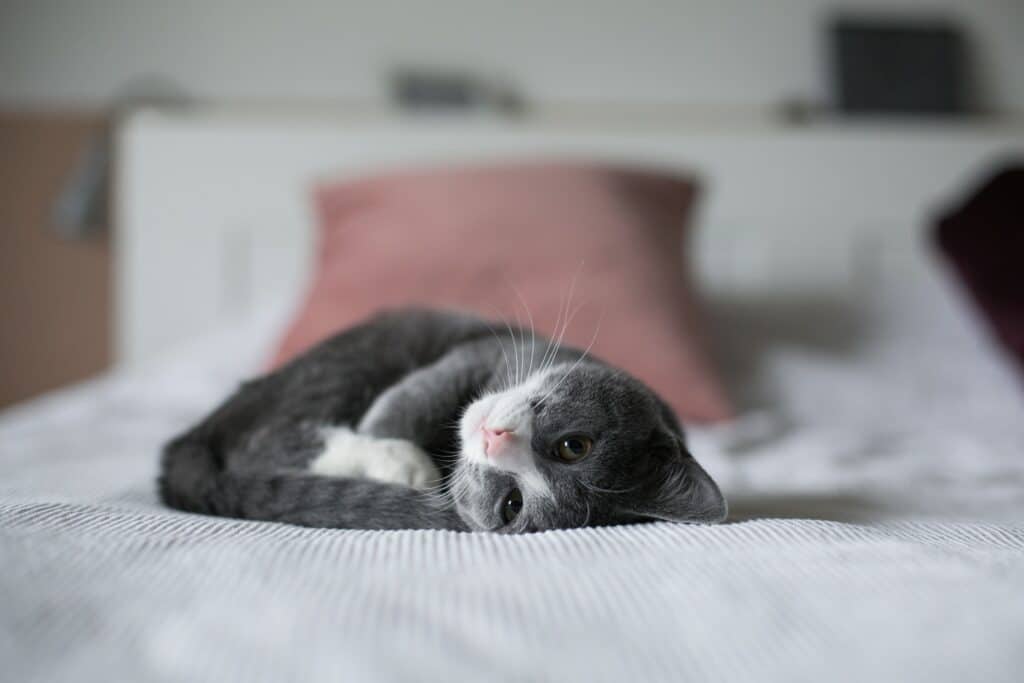
My Cat’s Experience with Feline Injection-Site Sarcomas
I used to think that I knew “everything” about owning cats – that was before we got Chumka. Within 2 years, I learned more things about being a cat owner, than my whole life thus far. In fact, by the middle of 2024, our cat was known by name at our local emergency veterinary hospital. I didn’t even need to state my name when I called them. They recognized my number and my voice…
But let’s rewind a little bit – to our first real medical scare… (aka the reason you’re reading this)
Disclaimer: The following blog post is a personal account of my experience and concerns regarding feline injection-site sarcoma (FISS). I am not a veterinarian, and the information shared here is based on my own research and personal journey. It is not intended to be medical advice.
Feline injection-site sarcoma is a serious condition. If you have any concerns about a lump or swelling on your cat, especially after a vaccination or injection, please contact your veterinarian immediately. They are the only ones qualified to provide a proper diagnosis and recommend the appropriate course of action for your cat’s specific health needs.
Always consult with a qualified veterinary professional for any medical advice or before making any decisions about your pet’s healthcare.
Our experience with Feline Injection-Site Sarcoma (FISS)
In early August 2023 we had our yearly general kitty check up visit at the vet. You know… The vet says that your cat is “on the chonky side”, and that their teeth are looking good but you need to schedule the cleaning soon, then your kitty gets their booster shots, and then you are on your way home.
And I thought that all was well, and we were done for the year… Boy Howdy, was I ever wrong!
About 1 week after the visit I noticed that there was a small lump on my cat’s front leg (the spot where the FELV vaccine was administered). It was small and it didn’t seem to bother the kitty. I decided to keep an eye on it, and check it every few days.
The bump continued to grow and by week 2, it doubled in size. By week 3, it was still growing so I called the vet and we were seen the very same week. The doctor agreed that the lump should be examined but wanted to wait a couple more days so the biopsy was done 4+ weeks post vaccination. This treatment followed the “3-2-1 rule” for monitoring potential tumours at injection sites in cats.
At the time of biopsy, the bump was present for 4+ weeks, and it was larger than 2cm.
The costs of biopsy and treatment options
We were very lucky to have a veterinarian so knowledgeable and with previous experience in this issue. The doctor explained that some vaccine manufacturers offer to cover the expenses of testing and treatment, as long as the pet owner agrees to share the medical findings/ reports with them. I was told that the information would be used for further research on Feline Injection-Site Sarcoma, and the vaccine batch would probably be discarded and the cat owners whose cats received shots from this batch would be notified.
The veterinarian was able to contact the manufacturer on our behalf, and we received the response within a couple business days – the costs of the biopsy would be covered. This was all done before the scheduled biopsy! I am telling you, we were so lucky to have such an amazing doctor!!
Biopsy Results
The wait to receive the biopsy results felt like forever. The only thing that kept me somewhat happy is that Chumka was very cuddly. He cuddles when he’s not feeling well, so while the kitty cuddles felt nice, it only added to my worries.
After what felt like an eternity, I received a call from our veterinarian – the biopsy came back negative! I may or may not have cried like a baby once the call was over…
And as much as I wish this was the end of the chapter for us, it’s something that we need to keep an eye on for a number of years. But before I elaborate on that, I want to share what I learned about Feline Injection-Site Sarcomas.
Post-Vaccination Lumps: The Veterinary Guideline
According to a study published in the Journal of feline medicine and surgery by Katrin Hartmann et al., a lump should be checked if it persists for longer than 3 months, is larger than 2 cm in diameter, or is increasing in size 1 month post-vaccination. (1)
What is Feline Injection-site sarcoma (FISS)?
It is a rare cancerous tumor that can develop in cats at the site of previous injections, including vaccinations. While uncommon, these tumors are locally invasive and can be difficult to remove completely.
Reports indicate that they occur at a rate of about 1-4 cases per 10,000 vaccinated cats in the USA. (2,3)
Despite the association with vaccination, the risk of not vaccinating cats for certain diseases may be much higher than the risk of tumor development.
What causes Feline Injection-site sarcomas (FISS)?
While the exact cause is unknown, it is believed that chronic inflammation at the site of injection (vaccine or other injections) plays a crucial role.
Although many causes of inflammation are associated with FISS development, the risk seems to be higher for vaccines compared with other injections.
Among different types of vaccines, the risk of FISS appears to be higher with adjuvanted vaccines. These vaccines contain an ingredient called an adjuvant that creates a stronger immune response, but it also causes more intense inflammation at the injection site. This link is supported by the fact that researchers often find traces of these adjuvants when they study the tumors. (4,5)
The observation that not all cats develop FISS after vaccination suggests that there might be a genetic predisposition.
Are only cats affected by FISS, and why?
While these tumors seem to be a specific concern for cats, similar growths have also been reported in ferrets and, very rarely, in dogs. (6,7)
How long after vaccination can sarcomas develop?
The time it takes for a sarcoma to appear after a vaccination can vary greatly. While some have been seen as early as two months after a shot, others have developed as late as 10 years later. However, most cases are thought to occur within one to three years. (8,9)
Can other injections (including microchip placement) cause FISS?
Yes, other injections and even microchip placement can cause sarcomas in cats. This is why the condition is more accurately called Feline Injection-Site Sarcoma (FISS) rather than “vaccine-associated sarcoma”.
There have been a few documented cases of sarcomas developing at the site of a microchip. While the risk is considered to be extremely low, it’s not zero. The foreign object itself can cause a chronic inflammatory reaction, which is the suspected cause of FISS. (10)
How to prevent Feline Injection-Site Sarcomas (FISS) + Recommended Injection Sites
As a study from Katrin Hartmann et al., published in the Journal of feline medicine and surgery (1), recommends:
Change where the injection is given: The best practice is to give injections in places where a tumor, if one were to develop, could be easily and completely removed with surgery.
Giving injections in a cat’s lower leg is a strategic choice. If a sarcoma were to develop there, it can be more easily treated by amputating the limb. Since these tumors are very difficult to completely remove with just surgery and often grow back, amputation is sometimes the most effective way to ensure a full cure. (11)
The area between a cat’s shoulder blades is generally avoided for injections. This is because it’s a very difficult place to operate on. If a tumor were to grow there, completely removing it would be nearly impossible, making treatment much more complicated and less successful.
Reduce inflammation: Vets should follow general guidelines to minimize irritation at injection sites. This includes avoiding substances that are known to cause a strong inflammatory reaction whenever possible.
Limit vaccinations: It’s important to vaccinate your cat only as often as truly necessary, following current veterinary guidelines. For example, some vaccines (like the feline leukemia, or FeLV, vaccine) may not be needed for indoor cats or those that have already been tested and confirmed to be positive for the virus.
It’s a good idea to work with your veterinarian to create a personalized vaccination plan for your cat. This ensures your pet is protected from diseases without getting any unnecessary shots, which can help lower the risk of injection-site sarcoma. Your vet is the best person to help you make these decisions, taking into account your cat’s age, health, and daily life.
What it all means for us going forward
Fast forward to today: we just had our yearly vet check up. It’s been 2 years since the FELV vaccine, so it was technically time for a booster. I was quite anxious and hesitant about it but I went there open minded. It was a different veterinarian, as our previous one moved away since.
After a lengthy discussion on Chumka’s current health and past reaction to that shot, we decided it was best to *not* administer the FELV vaccine.
But since the sarcomas can show up even years after vaccination, and my cat had such a big reaction, I periodically check that area – and will most likely keep checking for the rest of the kitty’s life.
Hello there! Some of the things I’m obsessed with are cats, science and medicine - so this (blog) is a perfect mixture of those three things, isn’t it?! Join me as I write about cool things I’ve learned and obsessed over.